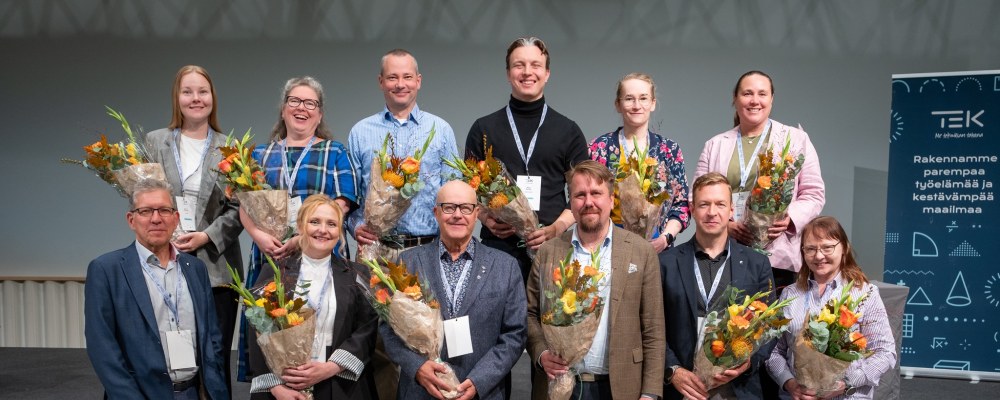
Plenty of TEK-spirit was packed into one room when the newly elected General Council convened for its organisational meeting in Helsinki on Friday, 11 September. Both full and deputy councillors were invited, and around 140 people attended.
“Thank you for being ready to take on this work on behalf of TEK and all its members,” said TEK CEO Jari Jokinen, opening the event.
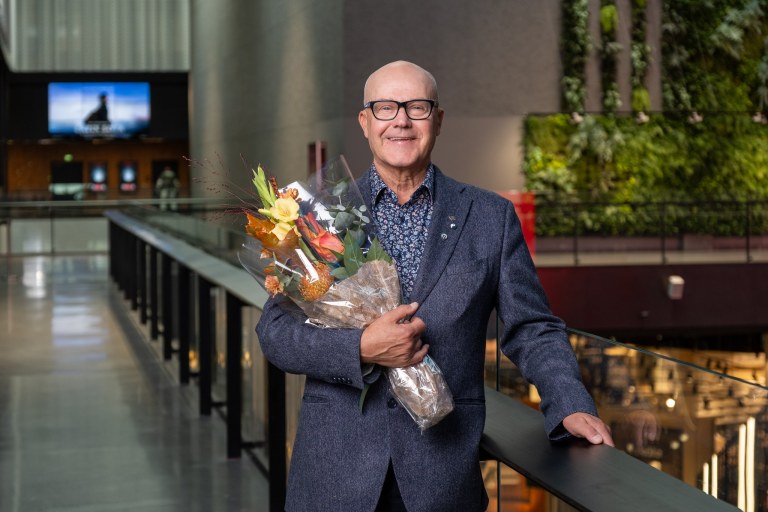
Under TEK’s rules, the oldest council member chairs the organisational meeting until the Council elects a new Chair. This honorary duty was performed this time by Markku Markkula (National Coalition Party).
“I have analysed TEK’s Board programmes and Council agreements since 1993. Looking at the arc from those days to the present, I see a long continuity. No other organisation combines scientific thinking, entrepreneurship, deep technological expertise and the expertise of its members in the same way,” Markkula said.
“TEK has been at its strongest when it has viewed labour market advocacy broadly, as more than negotiating pay rises. It is also about anticipating changes in work and renewing skills, for example.”
At the organisational meeting, the General Council organises its work by appointing councilors to various positions for the 2026–2029 Council term.
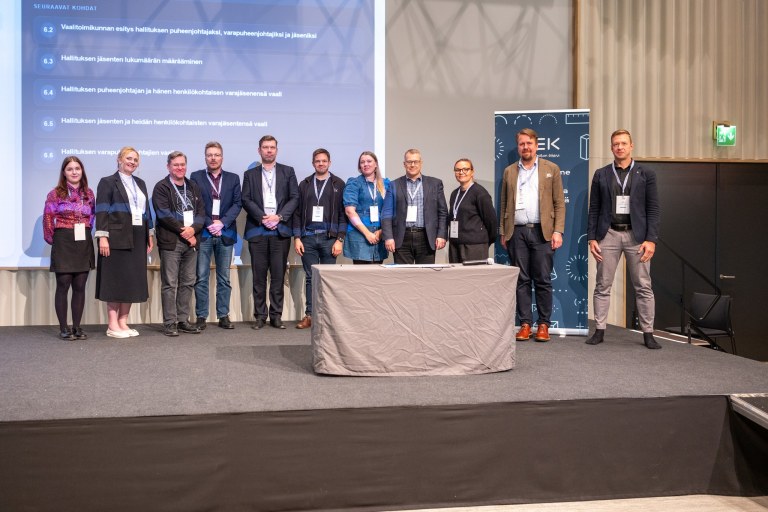
Arto Timperi (Unity and Teekkari Spirit), who also served as Chair during the previous term, was elected Chair of the Board. Elina Mustasalo (National Coalition Party) is the first Vice Chair and Jaakko Stenhäll (The Greens) the second Vice Chair.
The following members were elected to the Board for the term 11 September 2026–31 March 2028.
| Member | Deputy member |
| Arto Timperi, Chair (Unity and Teekkari Spirit) | Noora Laak (Left) |
| Mikko J. Salminen (Unity and Teekkari Spirit) | Virpi Paavola (Unity and Teekkari Spirit) |
| Ville Korpiluoto (Unity and Teekkari Spirit) | Elina Sillanpää (Unity and Teekkari Spirit) |
| Aliisa Pietilä (TEK Youth and Innovators) | Julius Haapakoski (TEK Youth and Innovators) |
| Elina Mustasalo (National Coalition Party) | Outi Ervasti (National Coalition Party) |
| Johanna Ahopelto (National Coalition Party) | Mikko Lasanen (Centre Party) |
| Mikko Merihaara (National Coalition Party) | Anu Vaari (iTyö) |
| Seija Kyhälä (iTyö) | Jari Nummikoski (iTyö) |
| Jaakko Stenhäll (The Greens) | Milja Lempinen (The Greens) |
| Senni Auvinen (The Greens) | Fanni Mattsson (The Greens) |
| Anne Granat-Jukakoski (Tfiffarna) | Casimir Ruohomaa (Tfiffarna) |
From 1 April 2028, Virpi Paavola and Elina Sillanpää will become full members of the Board, while Mikko J. Salminen and Ville Korpiluoto will become their deputy members. At the same time, Jussi Kasurinen (National Coalition Party) will replace Outi Ervasti as a deputy member, and Marianne Munkki (National Coalition Party) will replace Anu Vaari.
Mika Pajala will continue as the student representative until the end of the 2026 calendar year, with Katja Immonen as deputy.
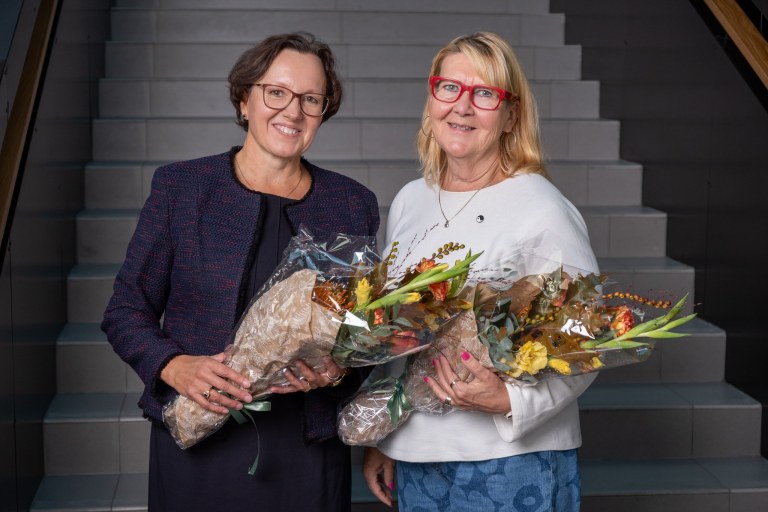
Lotta Forssell (National Coalition Party) was elected Chair of the General Council and Kristiina Hartikainen (Unity and Teekkari Spirit) Vice Chair.
The nominations were proposed by an election committee consisting of representatives of the Council groups. The preparations for the Board election were presented by the Council Agreement working group.
“The size of the Board will remain unchanged: ten seats will be allocated to the Council groups, one to TFiF and one to a student representative. The seats were allocated by electoral coalition using the D’Hondt method,” explained Ville Korpiluoto, who chaired the Council Agreement working group.
(Article continues after the photo.)
The Council Agreement focuses on the labour market, the organisation and society
At the constitutive meeting, the General Council confirms the Council Agreement, which guides TEK’s activities throughout the Council term. The agreement was prepared by a group consisting of group chairs and Council Agreement negotiators, with external facilitator Jari Ylitalo from Aalto University also taking part.
“The agreement was prepared mainly in two workshops. First, we gathered a large number of ideas, and in the next workshop the content was narrowed down towards the final agreement. It was also circulated within our own groups, and the TEK office was consulted,” Ville Korpiluoto explained.
“Differences of opinion concerned priorities: what should be included in the agreement, and what is worthwhile in itself but can remain outside it. Should the same issues be carried over from the previous agreement, or should the new agreement be compiled very concisely around the particular features of the present time?”
The result is a two-page Council Agreement divided into three themes: the labour market, the organisation and society.
“We hope and believe that the Council Agreement now signed will provide a solid foundation for the new Council term.”
(Article continues after the photo.)
Current affairs reviews celebrated membership growth and considered skills
CEO Jari Jokinen began with good news.
“Our membership has passed the milestone of 86,000. Particular thanks for this go to our student liaisons and guild liaisons, but also to all of you who talk about our work,” Jokinen said.
Student members accounted for the largest increase in membership, with their number growing by 4.56% over the year. Pensioner members recorded the second-largest increase, at 2.18%. The growth in student membership is reflected in the age distribution: 36% of members are aged 29 or under. The second-largest age group is 40–49-year-olds, who account for 19% of the membership.
There has also been less welcome growth in TEK’s operating environment. The employment situation in the technology sector has deteriorated significantly.
“Helsingin Sanomat reported that unemployment among Masters of Science in Technology (diplomi-insinööri) increased by 17% between July 2025 and July this year, while unemployment among holders of a Master of Science degree in the natural sciences increased by 15%. Only the social services sector saw a larger rise in unemployment. We now need to wake employers up: you cannot have experienced seniors at work unless you first hire juniors,” Jokinen pointed out.
Arto Timperi also gave a current affairs review in his capacity as Chair of the outgoing Board. The term included at least 54 Board meetings, 28 meetings of the chairs and 13 meetings of the Finance Committee. The work is carried out for a large community.
“More than 86,000 people want to be members of TEK. That is an impressive vote of confidence and a valuable asset. In terms of representativeness, however, we could do better: more people who meet the membership criteria could become members.”
Timperi also referred to the latest PISA results, which show a downward trend.
“We have reason to be concerned about the level of expertise among our members. We cannot afford to compromise on it at all. What else can Finland live on if not expertise and capital?” he asked.
“I hope that five years from now we will still be living in a free society and an independent state, and that we can continue to hold these meetings. TEK is a community for all professionals in our field – together, we are TEK,” Timperi concluded.
(Article continues after the photo.)
Two initiatives were submitted to the General Council. One concerned improving the situation and participation of young people at TEK. The other proposed adding student representative seats for the Universities of Helsinki, Jyväskylä and Eastern Finland, increasing the number of student representative seats from the current six to nine. The Council will respond to the initiatives at its autumn meeting on 19–20 November 2026. The autumn meeting will also discuss, among other matters, the action plan and budget for 2027.