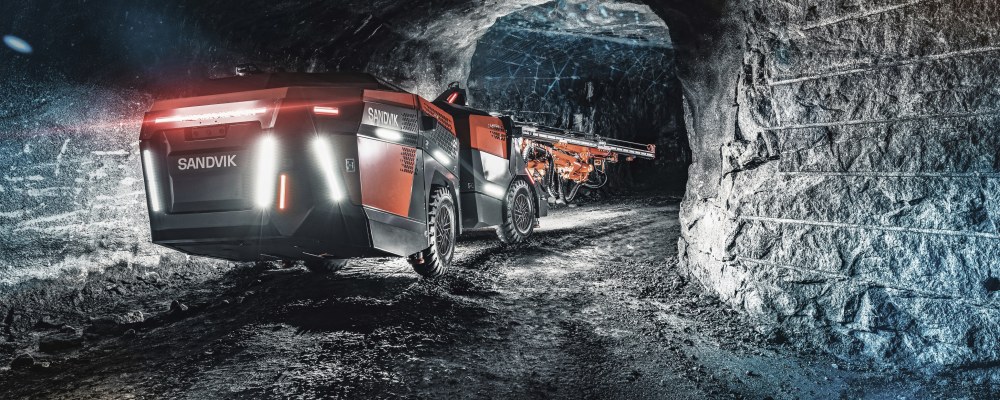
Amelia – a fully autonomous, AI-enabled underground drill rig completed under the direction of Sandvik’s 48-year-old Tampere Site Manager Jani Vilenius – is the company’s pride and joy.
“Amelia enters the mine and asks the operator for instructions. The operator tells Amelia, for example, to go into tunnel number 24 and drill ten holes. Amelia works out the route, makes her way to the location autonomously and then checks with the operator whether she is in the right place. Once she has got permission, Amelia drills the holes, exits the location and asks the operator for her next job”, Vilenius explains.
Prior to Amelia, Sandvik’s team in Tampere pioneered the mining industry’s first battery-electric underground drill rig in 2013, which was commercialised three years later. Vilenius now describes the vehicle as “semi-autonomous”.
“Product safety, sustainable development, information security”, Vilenius lists the latest buzzwords.
Vilenius got his doctorate from Tampere University of Technology in 2007. He wrote his doctoral dissertation on intelligent, mobile machinery. His research focused on automation and autonomy as means of controlling machinery.
Vilenius first came into contact with Sandvik’s Myllypuro facility in Tampere through a supplier: he was employed by a company that sold components and systems to Sandvik. At some point, Vilenius became aware that his expertise could be of interest to Sandvik.
“I was initially hired to oversee research and the test mine. Today, I wear two hats: Director of Technology Development and Services as well as Tampere Site Manager. We employ 1,500 people ranging from doctors of technology to mechanics.”
Vilenius also coordinates the company’s external technology funding.
The constantly changing legislation and inconsistent standards make development work challenging. More and more mines are in difficult-to-reach locations, and ore concentrations are found in increasingly inaccessible places.
Sustainable mining
Riku Pulli, 51, who earned his M.Sc. degree in Automation from Tampere University of Technology, lives and breathes mining. He has spent his entire career designing mining machinery in Tampere.
(The article continues after the image.)
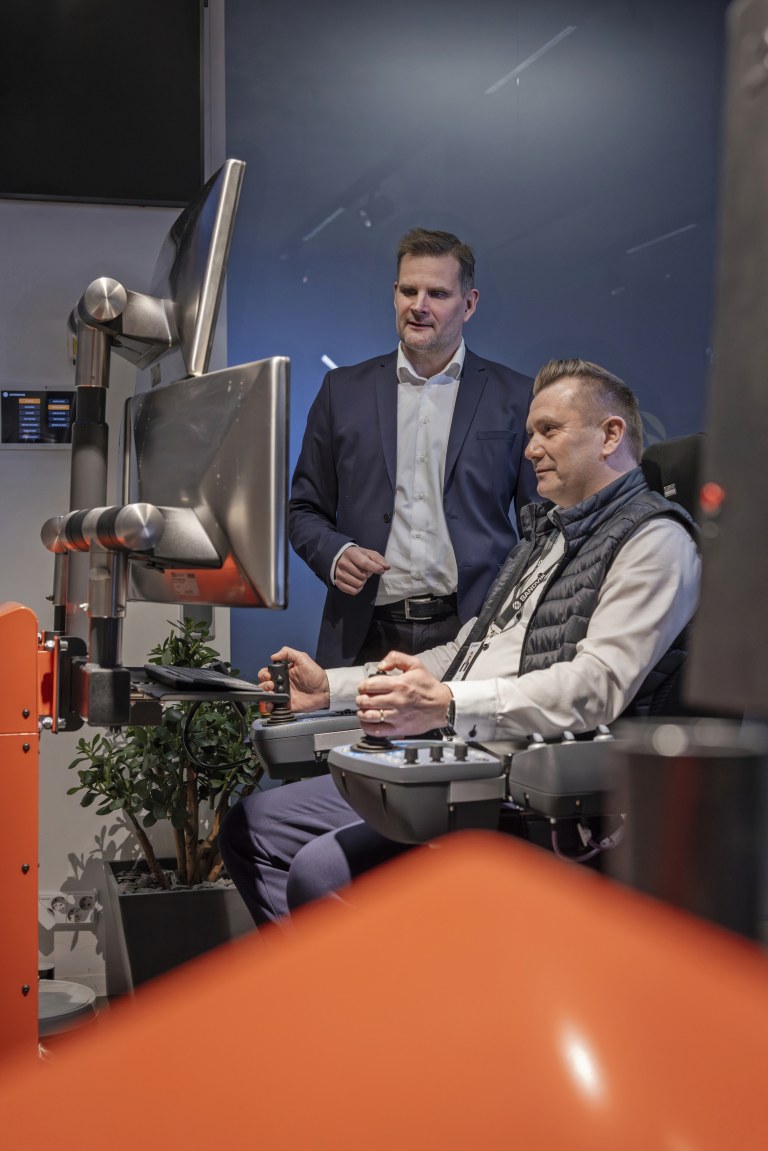
Sandvik, or Sandvik-Tamrock as it was at the time, commissioned Pulli to write a master’s thesis on teleoperation techniques in articulated mining machinery in 1998, which launched his 26-year career in mining technology.
“The company had not yet introduced large-scale software-based design at that time, and we only had a handful of people working on automation product development”, says Pulli, reminiscing about the early days of his career. His current title at Sandvik is President of Digital Mining Technologies.
“The top brass already had their sights set on an autonomous mining automation system, however. The job of developing one was given to our tiny design team.”
The team were given nine months to complete the job. They met their deadline and demonstrated an unmanned, self-guiding loader that no longer needed to be controlled remotely in December 1999.
Mining professionals all the way from South Africa came to see the wondrous vehicle that the team in Myllypuro in Tampere had created.
“The vehicle's movement was very unstable, and it needed a lot of improvements otherwise as well. But the first step had been taken.”
The South Africans were looking for a new, efficient way to transport ore. They became involved in the search for solutions and got their wish around the middle of the first decade of the 2000s.
The new mining automation system saw eight trucks transporting ore completely without a driver at speeds of just above 30 kilometres an hour along narrow mining tunnels.
“If you are thinking that 30 kilometres an hour is slow, just remember that cars rarely get above that in a regular underground car park. Mining tunnels are also dark, and there is mud on the ground and dust in the air. There is no GPS. The gap between the vehicle and the wall is no more than 10 to 20 centimetres. Driving any faster is impossible – whether the vehicle is operated manually or autonomously.”
The division headed by Riku Pulli does not just design machinery but in fact spends more and more of its time developing software. And not all the software they develop are directly related to machinery but to mining processes more generally. Pulli’s unit has grown from a tiny team to a global organisation that employs professionals from around twenty countries.
“This is fascinating work for someone with a M.Sc. degree in technology. Our machinery increases mining yields considerably. It also keeps people safe and away from the most dangerous areas. In addition, our work makes mining more sustainable, which I personally find very motivating.”
Autonomous vehicles and robots are becoming increasingly common
Riku Pulli and Jani Vilenius have witnessed the rapid evolution of mining technology with their own eyes, and there are no signs of progress slowing down.
Both expect to see more and more autonomous vehicles and robots of all kinds operating in mines in ten years’ time. The role of humans will become increasingly centred on managing the process and servicing the machinery.
With the world in a state of flux, the price of gold is likely to go up, as gold is considered a stable investment in times of global uncertainty. Gold mining can therefore be expected to increase.
Wind turbines, solar panels and electric cars also rely on mined minerals, and demand for these is forecast to grow.
“Mining that promotes sustainable development will become more and more important”, Pulli and Vilenius say in unison.
Award-winning technology exporter
Sandvik’s test facility in Tampere is part of a Swedish multinational engineering company and employs approximately 1,500 people. Around half are production workers and the rest are engineers and other staff.
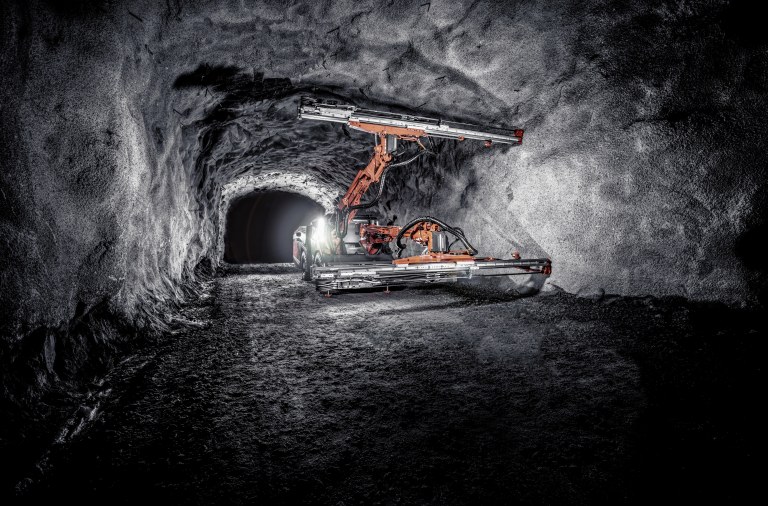
The facility designs and builds underground drill rigs as well as related automation, electrification and digitalisation solutions.
More than 95 per cent of the facility’s output is exported. The biggest markets are Australia, Africa and countries in North and South America.
Sandvik in Tampere, officially Sandvik Mining and Construction Oy, is the biggest corporation tax payer in the Tampere region and the eighth biggest corporation tax payer in Finland.
The company received the Internationalisation Award of the President of the Republic in November 2025 in recognition of its long-term presence and sizeable investment in Finland as well as its contribution to Finnish industry and innovation ecosystem.