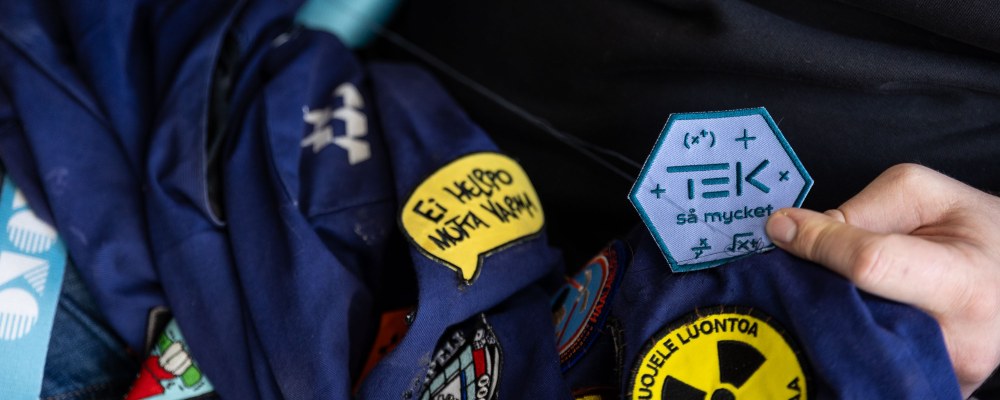
Many student unions, societies and clubs have patches made. Organisations often have one or several patches of their own, which are sold at events and in guild or student rooms. According to TEK’s Student Membership Officer Vesa Taskinen, selling patches at a few euros each is hardly a money-maker, but the price generally covers the cost of manufacturing and leaves a nominal profit.
Event patches are common.
According to Taskinen, designing patches is also a fun pastime for many. Individual students usually order patches to sell in small editions of around 50 units.
There are several companies specialised in patches in Finland. The one featured in this article is Promler, which was chosen to produce the new TEK patch. Promler supplies 1.2 million patches annually. The minimum order according to the company’s price list is 25 patches – smaller orders are also accepted but the charge will be based on 25 units. The average order is around 200 patches.
In addition to students, Promler supplies patches to customers such as the Finnish Defence Forces, the Police, fire brigades and private businesses. Businesses have begun to use patches as a marketing gimmick.
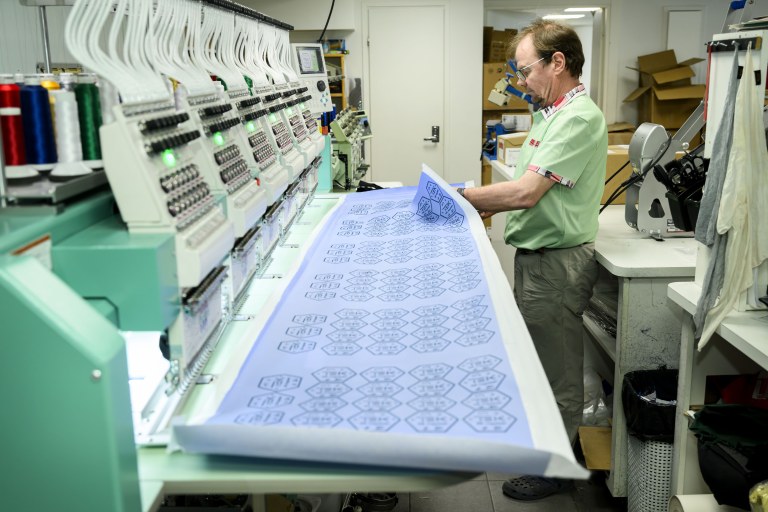
Promler makes around five per cent of its patches in Finland and the rest in China. One hundred of TEK’s patches were produced at the company’s factory in Helsinki, where Promler has three embroidery machines. TEK’s order for 2,500 patches was too big for the Helsinki factory to handle on its own, however. The rest of the patches were produced in China, where Promler has a factory with 50 embroidery machines.
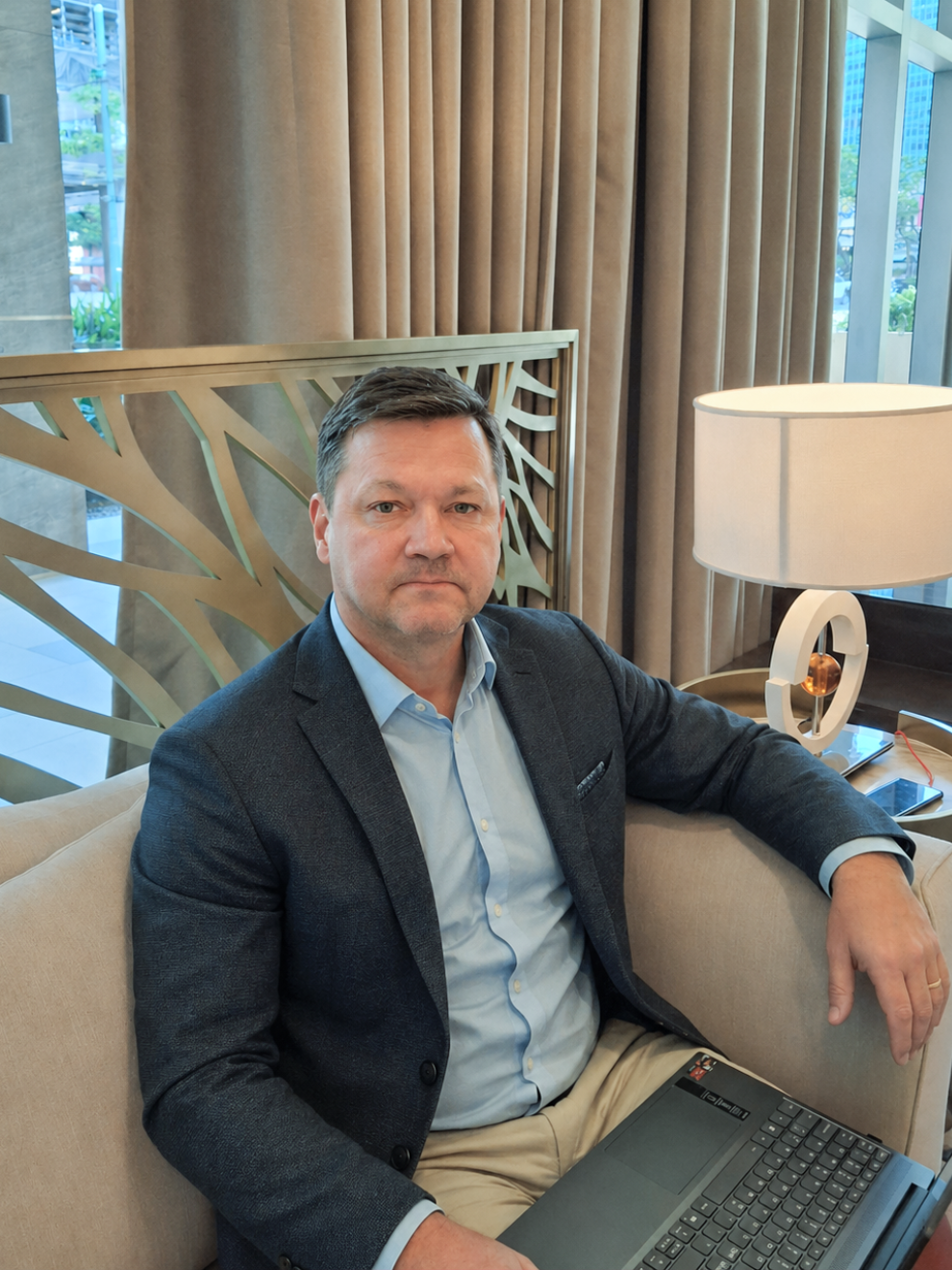
According to Jyri Grundström (in the photo), who is one of the owners of the business, production costs in Finland are too high to make domestic operations profitable. Promler’s representatives visit the company’s factory in China once a year to inspect the working conditions there.
The materials used in Promler’s fabric patches comply with the Oeko-Tex standard, which ensures that they do not contain harmful substances. According to Grundström, materials suitable for making fabric patches are hard to come by in Finland.
Promler is a family business, which Grundström owns together with his mother and stepfather. The company employs eight people in total. The business was founded in 1994.
Photo from Jyri Grundström.
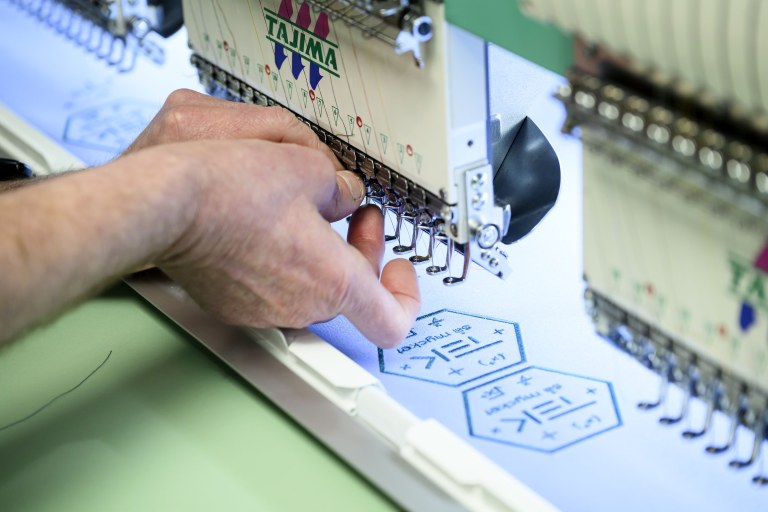
Promler has no restrictions on the shape of patches. TEK’s patches are hexagonal and measure 8 x 7 centimetres. The lettering and graphic elements are machine-embroidered.
The design is first digitised and uploaded to a computerised embroidery machine. The thread colours and directions are also programmed into the machine at this stage. The digitisation parameters depend on the base material – for example, leather requires a longer stitch length. In most cases, the base material is a cotton-polyester blend fabric. Promler also offers special fabrics such as satin, glitter fabric, artificial leather and reflective fabric. Fabrics come in 94 colours.
A single patch can feature up to 12 different-coloured threads. If there are more colours involved, the threads need to be changed manually, which costs extra. There are hundreds of thread colours to choose from.
Small lettering is difficult to embroider, which is why Promler has specified a minimum text size of three to four millimetres.
Promler charges for patches based on the amount of embroidery involved in the design – embroidery is a time-consuming process, and patches with more embroidery are consequently more expensive. According to Jyri Grundström, the average amount of embroidery in a patch is 75 per cent. Promler also supplies printed patches.
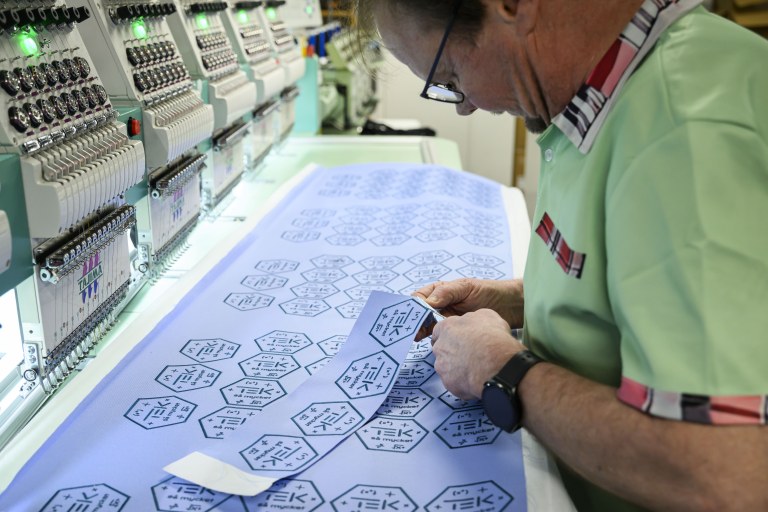
The patch edges can be cut with a laser or finished using an overlock sewing machine. When a laser cutter is used, an optical reader traces the outline of the patch to generate a cutting path. A laser beam fuses the ends of threads along the edges of the patch into the patch. Basic shapes such as round and square patches can be finished using an overlock sewing machine. The seam thickness is approximately three millimetres. The edges of TEK’s patch were finished with a seam sealing embroidery and cut to shape by hand and with a laser.
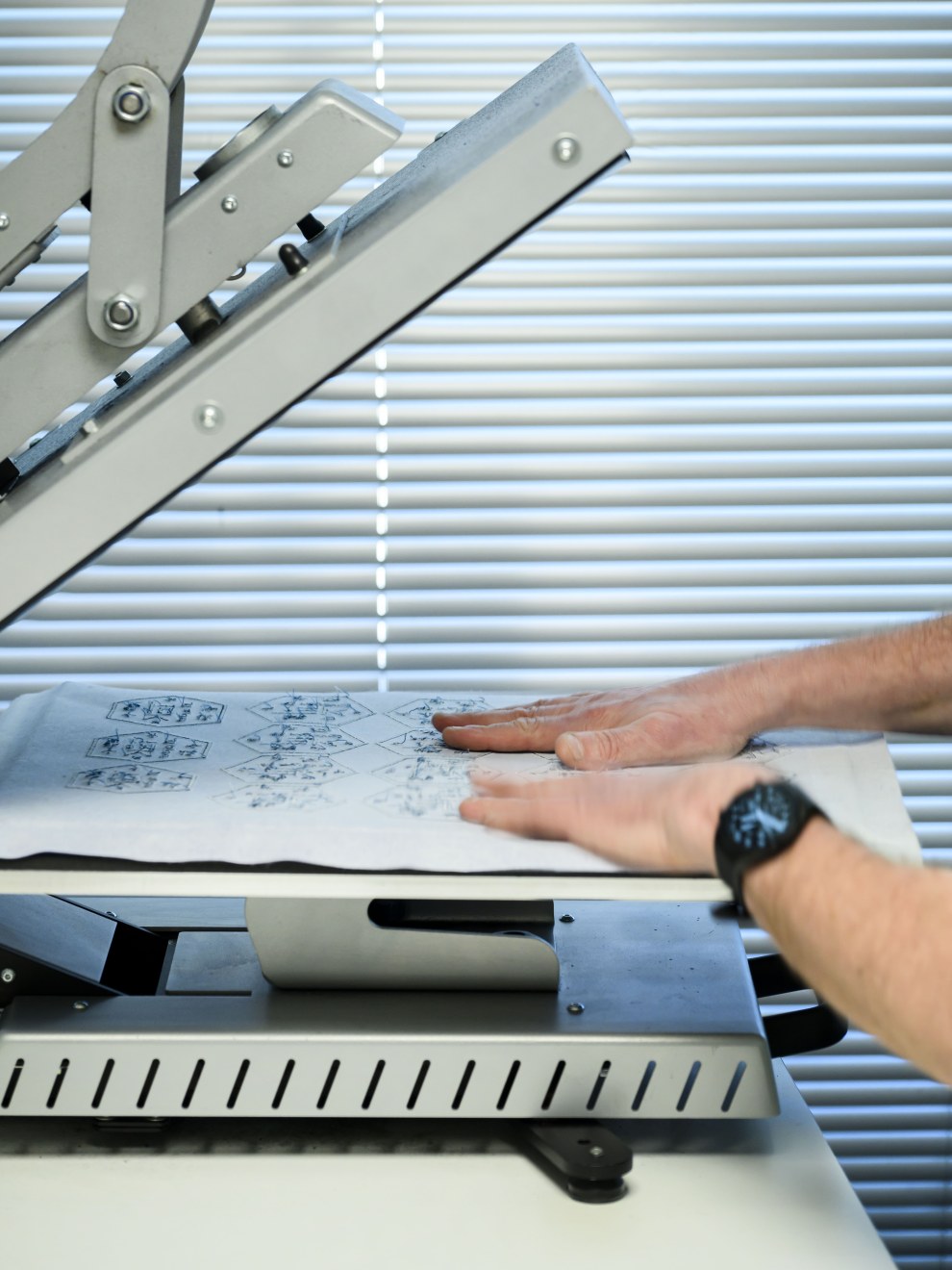
The backing material is attached using a press. Photo: Jussi Helttunen
A backing fabric is used on the reverse side of the patch. According to Grundström, the fleece used in TEK’s patch is the most common backing material. Patches with fabric backing need to be attached to clothing by sewing. The backing can also be adhesive, in which case the patch can be ironed on. The Finnish Defence Forces use Velcro backing on their patches.
An NFC (near-field communication) tag can be inserted between the design layer and the backing material. This allows smartphones in close proximity to the patch to connect to a website link embedded in the tag.
It takes Promler approximately two weeks from accepting an order to produce the finished article. For a rush fee, customers can get their patches in ten days.
From Promler’s perspective, demand for fabric patches peaks around May Day. The start of the academic year in the autumn is also a busy time.
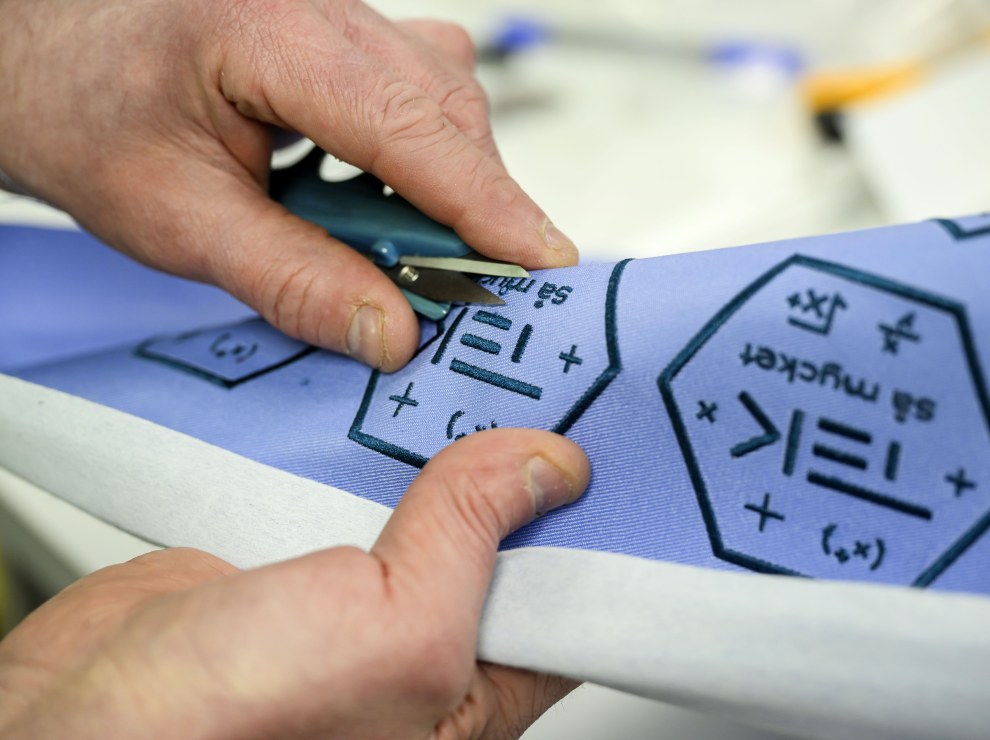
The gaps between the threads are cut by hand. Photo: Jussi Helttunen
TEK’s newest patch reads ‘TEK så mycket’ – a clever twist on the Swedish phrase ‘tack så mycket’, which translates to ‘thank you very much’. The tagline was among the entries submitted to a competition run by TEK in February 2025. Another entry, which read ‘TEK it easy <3’, was turned into a patch last year. The idea is to produce a series of patches that complement each other and that students can collect.
TEK’s having its own patches is nothing new, but Vesa Taskinen feels that past patches have been ‘a bit corporate’ or, to put it bluntly, boring. According to Taskinen, there are many organisations that only put their logo on their patch. Patches with humorous or witty messages are common, however, and logo patches are losing their appeal. TEK’s student liaisons campaigned for a fresh approach to TEK’s patches. The new patches are a collection of dad jokes – and Taskinen thinks they are perfect.
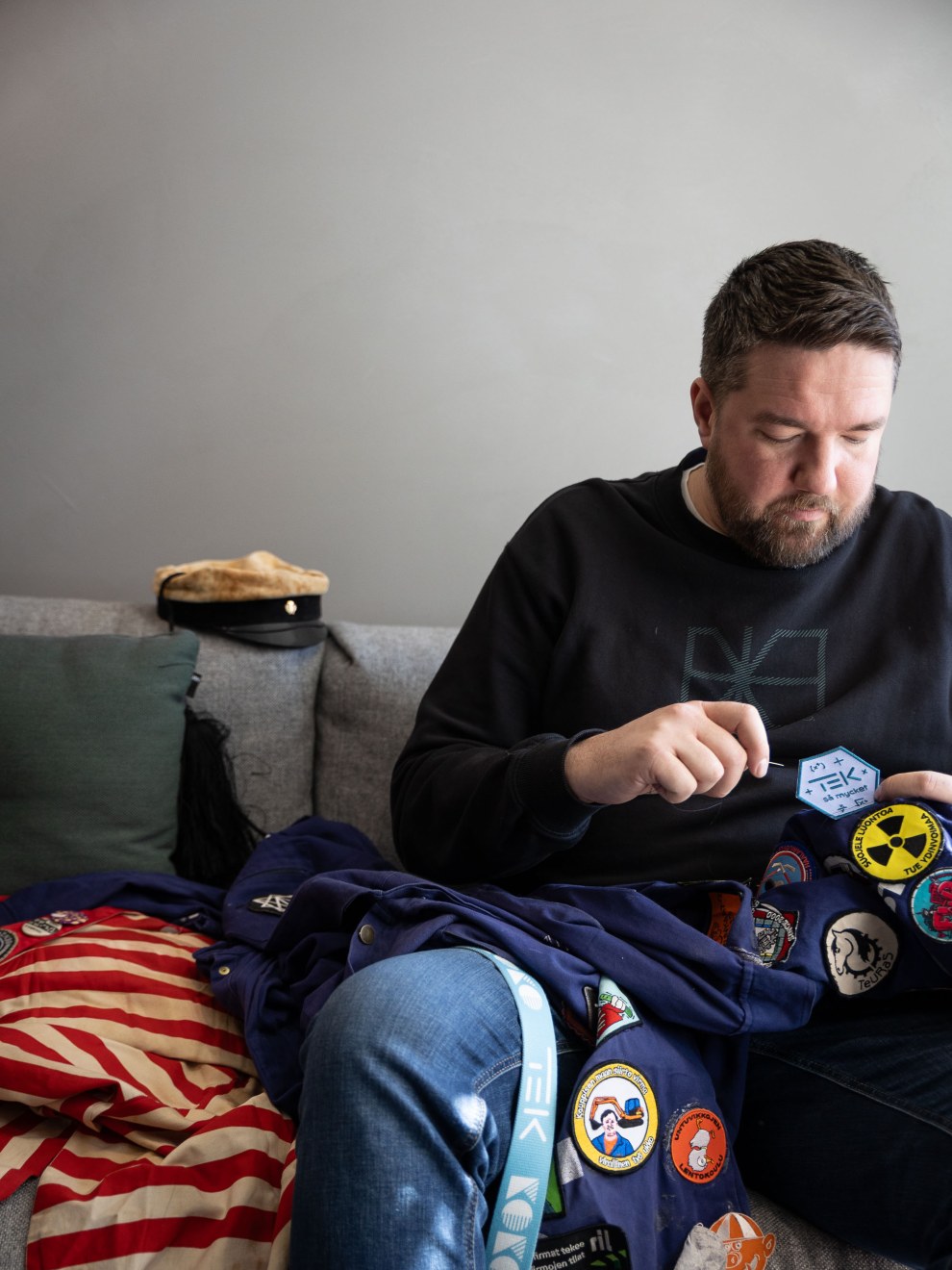
According to Vesa Taskinen (in the photo), tradition dictates that patches should be sewn onto overalls by hand, but he admits to having been lazy and using glue to attach many of his patches. He rarely wears his student overalls these days except for the celebrations around May Day (vappu/Wappu).
Taskinen’s favourite patches are those that come with a memory or that were particularly difficult to obtain. To him, collecting patches is like a game – more patches and rarer patches signify greater engagement with student culture.
TEK’s latest patch was available from TEK’s local student liaisons at many of the events surrounding May Day. Some patches may still be available, check with your local student liaison.
Photo: Helena Hagberg
Further reading: “Just graduate already!” – People on the street comment on patchful overalls
Further reading: How a teekkari cap is made
This article was edited 23.9.2026 8:30: added image caption to the first photo, moved the info about when the demand for fabric patches peaks a bit earlier in the article, and updated the info about where to get the TEK patch and also "new patch" to "newest".