
In short
- General increases are a part of collective agreements, annually raising salaries of those included in the agreement.
- High unionization is vital for ensuring the general increase is as high as possible.
- TEK has salary data and services to help in suggesting a salary or negotiating a new one.
Being paid a fair wage is a fundamental right in working life but knowing how to achieve this isn’t always easy. Particularly for those new to the Finnish labour market, whether graduating or moving from abroad, it can be hard to ask for the salary you deserve, or to later negotiate pay increases.
Fortunately, one core role of the union system is to ensure your salary increases annually even without hard negotiations, as well as helping you when a raise is needed to due a new position, task or as a reward for good work.
Text continues after the image.
As was presented on How are my working rights protected? page, collective agreements are agreed from the negotiations between employee and employer representatives. As well as securing many aspects of working life, these also include general increases, with the aim of maintaining or increasing employee salary even after inflation.
TEK’s research shows the importance of these rises well. In the 2025 Labour Market Survey, 83% of respondents reported their salary had increased from the previous year. Of these, 77% said this pay rise was due to the flat general increase listed in the collective agreement.
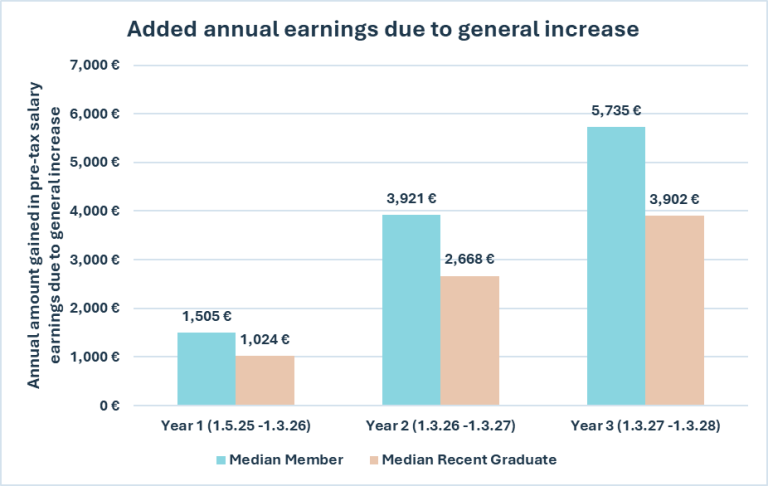
The graph above shows an example of the impact of the general increase, based on the average earnings of TEK’s membership and recent graduates. The general increase used is the maximum negotiated within the collective agreement of the IT service sector, which came into effect on 1 May 2025, and includes the full employer decided amount. From the general increase alone, a median member gains over 11,000 € in the period of the agreement, while the median recent graduate earns an extra 7,500 €.
The ability to negotiate these increases is due to high unionization in Finland and the technology sector. Even small drops in the increase may cost far more than the union membership. The general increase impacts all employees covered by the agreement, whether a union member or not.
What about negotiating a raise or new salary?
Job positions asking for a requested salary is still unfortunately common in Finland. TEK provides salary statistics and advice for members, which offer the most comparable salary data based on TEK member research. The Salary Surveyor is based on thousands of salaries reported by members each year, and allows fine-tuning based on time since graduation, size of company and sector, amongst other things.
While TEK’s salary data is not legally binding, meaning companies will often offer less, they act as a vital starting point in negotiations to ensure a somewhat realistic request.
Similarly, the salary data is usable when negotiating a raise. On top of this, TEK has salary advice available for members to provide support at all stages of the process.
YTN, the negotiating organisation TEK is a part of, also provides information on salary negotiation. Download a pdf here.