
“Resolving the shortage of experts is only the third most important thing,” says dean Jouko Lampinen. There are two even more important things that he wants to promote in the field of technology.
For the dean of the Aalto University School of Science, these are the diversity of the field and opening up its meaningfulness to young people.
“Technology has a significant impact on the development of society. In this case, the direction of development is influenced by who is doing the developing.”
Lampinen says that for the sake of equitable societal development, it is important that technology is being created by a large number of different people. In this way, the solutions developed will also work for a larger number of people.
“We know that if the developer group is homogeneous, technology will evolve based on the views and needs of a particular group.”
For young people, Lampinen wants to convey the message that the world can be changed in the field of technology.
“A lot of young people want to make the world a better place. This may lead to a specific chain of thought, to the effect that people can be helped in the health care sector. However, we know that, in a broader perspective, the development of technologies takes the world in a certain direction, and if you want to change that direction, then the most effective way to do this is to get involved in the development of technologies.”
Lampinen promotes these issues, which he finds important, through the Shaking Up Tech-event, for example. The idea for this event has originated from Aalto University’s planning manager Marja Niemi, while Lampinen has brought forward the idea into action. The purpose of the annual university event is to challenge prejudices and provide young women and gender minorities with a versatile picture of technology as a career choice.
“This is not a student recruitment event for specific universities, but a presentation of the opportunities in the field of technology,” says Lampinen.
For example, the share of women of the bachelor’s degree students starting their studies at the Aalto University School of Science in 2025 was 22 per cent, while the share of women at the School of Electrical Engineering was 27. According to Lampinen, the gender distribution at the School of Science has grown more equal relatively slowly. The distribution has become more equalised within the student body as well as within the research and teaching staff.
“We recruit based on merits, but we have concentrated on communicating the message that our environment is also suitable for non-male applicants. This means that we also have more role models.”
Quantum algorithms also benefit from different ways of thinking
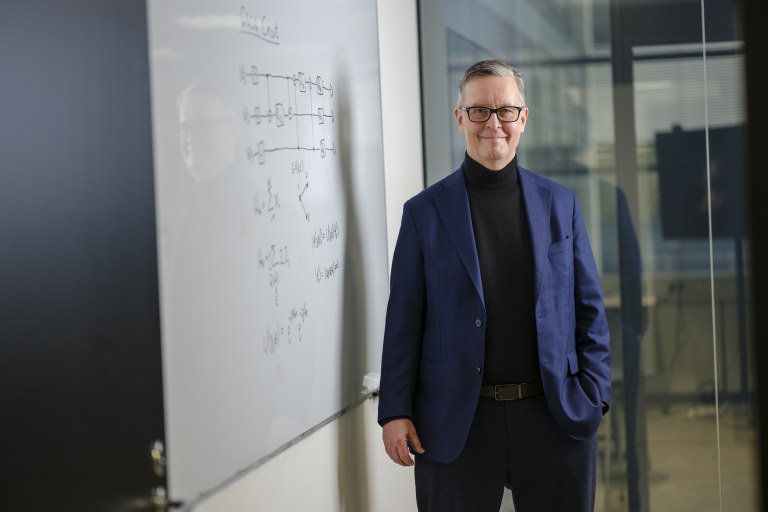
The goal of Finnish QMill Oy is to be the leading supplier of quantum algorithms in the 2030s and to be a significant global actor. In addition to quantum technology researchers and universities, the company’s customers would ideally include companies operating in the financial, technology or energy sectors, as well as companies working with telecommunications networks, in logistics and distribution, and in the defence sector.
QMill’s CEO Hannu Kauppinen’s work history includes 26 years at Nokia, for example as director of research and technology. Thinking about diversity was a familiar task for Kauppinen already since then.
“The same mould shapes similar views, while diverse moulds shape diverse ones. When we develop new technology and ideas, it is highly beneficial that people have different ways of thinking and diverse backgrounds. This helps because we can choose the best ideas from among those that are generated from different perspectives,” he says.
“Of course, the supply on the labour market is limited. We simply do not have enough women available for our jobs, and that is a problem.”
Kauppinen is pleased that QMill has people of different nationalities and cultures, experts of different ages from different fields and genders.
“Quantum technology will generate competitive advantages. It can be used to create complex routings and solve mathematical tasks that even the best supercomputers cannot do,” says Kauppinen.
Quantum computers are still unable to do this, but Kauppinen estimates that this may happen perhaps already by 2026 or 2027. And there are major business benefits that could emerge by 2029.
QMill believes that it will achieve this goal with expertise. According to Kauppinen, a strong foundation can be created for the company by a team that is able to carry out high-quality research, brainstorm new ideas and develop algorithms that help the company get ahead of its competitors.
“Finland has expertise and we also can bring experts here, as long as we are good enough.”
QMill now has 22 employees representing 8 different nationalities. Three out of four of them have doctoral degrees.
In 2024, Kauppinen founded QMill, together with former VTT employee Ville Kotovirta, Toni Annala, an assistant professor at the University of Toronto, and Professor Mikko Möttönen from Aalto University. Möttönen is also one of the founders of IQM, which builds quantum computers.
Versatility reduces bias
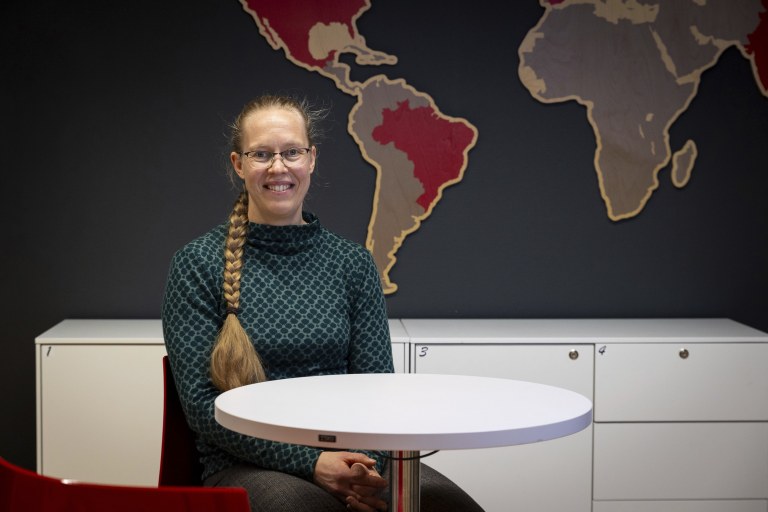
Johanna Forsman leads a ten-person product development team in a semiconductor company in Murata.
The company has recently been a venue for conversations about diversity: supervisors have received training, and there have been internal information sessions on the topic. According to Forsman, Murata has a fairly even gender distribution.
“I hope that everyone, regardless of their gender or other characteristics, has equal opportunities to choose different fields, as well as to self-actualise and to develop themselves,” she says.
“In addition, if we look at research data, companies with a more equal gender distribution tend to do better. If the group is more diverse, they do not have the same background or thought biases.”
Forsman has a doctorate of science in technology. Even back in high school, she had no idea what she would do after having passed the matriculation examination.
“I was interested in various things, in the natural sciences and in how the world works,” she says.
Forsman took her matriculation examination in 2001. During her high school years, she and her friends needed more information about the kind of work which academic graduates actually do.
“There was not that much information. In practice, we relied on information from friends, rumours and marketing material from universities.”
Forsman decided to choose physics, and was admitted to what was then called the Helsinki University of Technology to study technical physics. She believed that the most interesting and sensible work would be conducted in this field in the future, emphasising problem-solving and scientific evidence as well as data-based thinking.
Has the work been similar to what Forsman expected?
“Yes, the work is interesting and is strongly related to high technology. But I couldn’t possibly have imagined the range of problems I would be able to address!”
Murata’s headquarters are in Japan, while Finland’s department within the company is located in Vantaa, with 800 people working there. The company manufactures electronic components and solutions. The sensors developed and manufactured in Vantaa are used especially in the automotive industry, but also in the health technology sector – for example, in pacemakers. The team led by Forsman focuses on lithography and plasma etching.
Shaking up Tech
Johanna Forsman was one of the speakers at Shaking Up Tech this year. The event was organised at Aalto University, the University of Tampere and the University of Oulu on 22 January 2026. TEK supported the organisation of the event. The universities of LUT, Eastern Finland, Turku and Jyväskylä are involved in Shaking Up Tech.
Read more: