
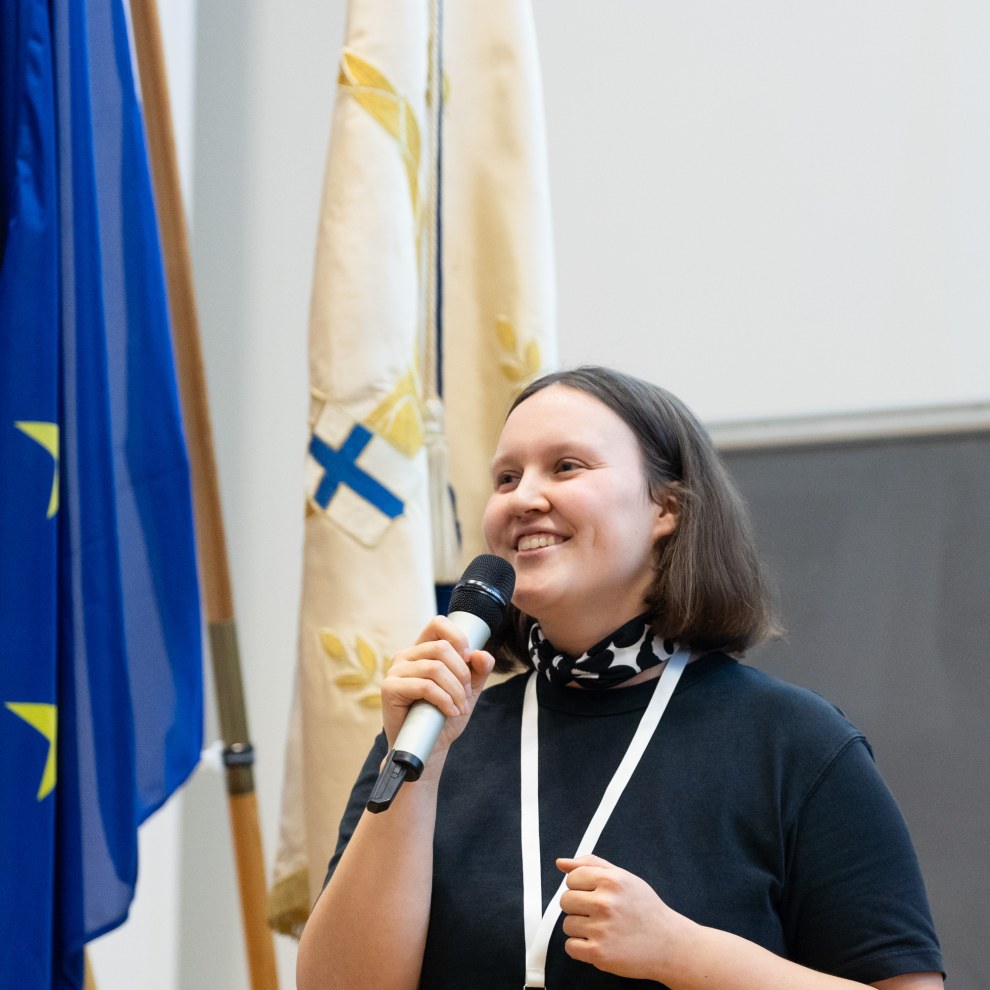
A friend slid into my DMs encouraging me to run for vice chair of TOKYO, the subject association for students at Aalto University's School of Arts, Design and Architecture. So, I did. This was the beginning of my journey in the Finnish student movement as an international student. Looking back, I was driven by curiosity, an eagerness to advocate for international students and a sense that there was room for me in these decision- making spaces. Despite the growing numbers, international students have remained underrepresented or entirely absent from student decision-making bodies. At the same time, I recognized that my own experience did not reflect that of every international student. As an EU citizen, I did not pay tuition fees or face the same residence permit restrictions as many of my classmates and friends. For me, representation meant bringing these different experiences into discussions and decision-making. Since then, I have served on the board of the Aalto University Student Union and the National Union of University Students in Finland, and I am currently a board member at Akava Students.
From the outside, this might look like a straightforward career path in the student movement, where one takes on more responsibility each year. Behind the scenes, it was also a process of finding my voice and growing into the role of an advocate. I had to navigate not only a new language but also unfamiliar political and higher education contexts. In retrospect, I am grateful to the specialists I worked most closely with, who not only answered my questions but also provided the much-needed context to deepen my understanding.
for the first time, I got excited for two reasons.
Last year, when I learnt that English speakers could apply to the Akava Students Board for the first time, I got excited for two reasons. First, I believe representation matters. In the current Finnish political climate, immigration policies have been tightened, and tuition fees for students from outside the EU and EEA now cover the full cost of their education. I wanted to continue advocating for international students and bring greater attention to the challenges and opportunities we face when transitioning to working life in Finland.
Second, I saw parallels between the student movement and the labor movement. Both represent and advocate for their members’ interests, foster a sense of community and actively participate in the societal discussions.
Akava Students has several channels to influence decision-making, including meeting Members of Parliament, writing statements and developing policy positions. At the beginning of the year, I co-wrote a joint statement with board members from SYL and SAMOK titled ‘A future to trust in – concrete steps to retain international students in Finland’. The statement highlighted concrete solutions to support the transition of international students into the Finnish working life and aimed to influence Finnish politicians and other decision makers. At the Akava Students Council meeting in August, the council took a joint stance opposing the proposed one-year waiting period for family reunification of international students, broadening Akava Students’ advocacy positions.
Getting involved in something new always takes courage and finding your voice can take time. The labour movement, just as the student movement, needs the students and recent graduates to help shape its future. With the upcoming parliamentary elections in Finland, now it is a good opportunity to co-develop what the future of higher education and working life in Finland will look like!
photo: Anriika photography