
In short
- Trade union membership is common, accepted and key part of Finnish working life.
- TEK is the trade union for those with a university degree in engineering, architecture and related STEM fields.
- Unions protect working rights, as well as providing a range of work life-related services to members.
Trade unions form a core part of the labour market system in Finland. Together with employer organisations and the state, they negotiate the agreements that secure the working conditions that make the Finnish working life one of the best in the world. These negotiations also create a more reliable and predictable working life.
Being a member of a trade union is both common and non-stigmatizing, meaning it does not come with the negative “disruptor” connections that can be seen in many countries around the world. Membership is, however, confidential.
Text continues after the image.
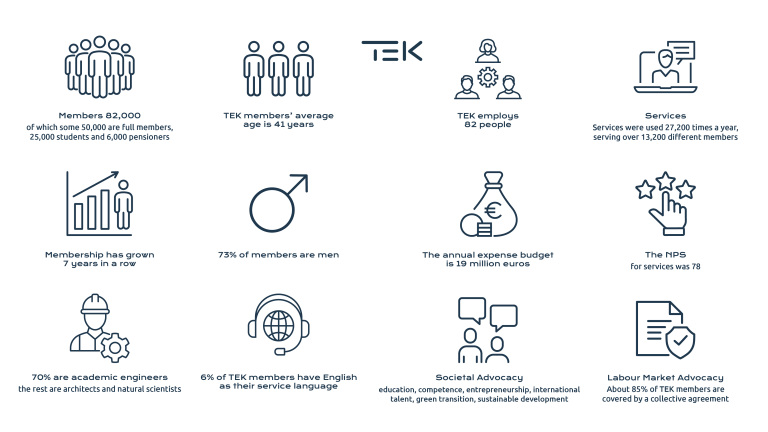
As well as negotiating the agreements to secure working conditions, trade unions also provide a range of services to members to support their careers. These services typically include at least legal support, career services, various events and trainings, with a range of others depending on the union.
Who are TEK?
TEK is the trade union for academic engineers*, architects and related STEM field experts, such as ICT, maths and physics. With around 85,000 members, TEK is a large trade union, with members across the country in a variety of fields. Included in the membership are also over 25,000 student members.
Finland has more than 65 trade unions. They are grouped based on the type of work their members do into three main confederations: Akava, STTK and SAK. TEK is a part of Akava, which represents unions for people with different higher‑education backgrounds. This system of confederations further allows for combined voices and unity among workers.
While the fundamental role of all unions is the same, there may be large differences in actions taken depending on membership make-up or size, for example blue-collar and white-collar unions may offer different services based on need. Negotiation however remains central.
Source on the percentage of Finland's unionization: Statista.com
*Academic engineers mean Master of Science in Engineering or Technology. In Finnish the common term is diplomi-insinööri.